| 1 |
Traditional Blade |
Narrow, elongated head with a compact profile |
Heel-shafted or near the heel |
Usually moderate to strong toe hang |
Arcing stroke with noticeable face rotation |
Classic shape, low visual bulk, and a relatively small sweet spot |
Light appearance and precise alignment for golfers who prefer traditional shapes |
Generally offers less forgiveness on off-center strikes than larger heads |
| 2 |
Heel-Toe Weighted Blade |
Blade with additional mass positioned toward the heel and toe |
Usually heel-shafted |
Moderate toe hang is common |
Slight arc to strong arc |
A blade profile with perimeter weighting to increase resistance to twisting |
More stable than a basic blade while retaining a compact look |
Still requires reasonably consistent contact and may not suit a straight-back stroke |
| 3 |
Center-Shafted Blade |
Compact blade with the shaft entering near the head center |
Center or slightly off-center |
Often close to face-balanced, depending on the design |
Straight-back-and-through or slight arc |
Shaft placement can make the face look symmetrical at address |
Can support a centered setup and a stable, square presentation |
The unusual visual setup may require an adjustment period; balance varies by model |
| 4 |
Mid-Mallet |
Medium-sized rounded or winged head between a blade and mallet |
Heel, center, or slightly forward depending on the model |
Face-balanced to moderate toe hang |
Straight to moderate arc |
A compromise between blade feedback and mallet stability |
Provides useful alignment space without the full size of a large mallet |
Head shape and balance differ widely, so fitting is more important than the category name alone |
| 5 |
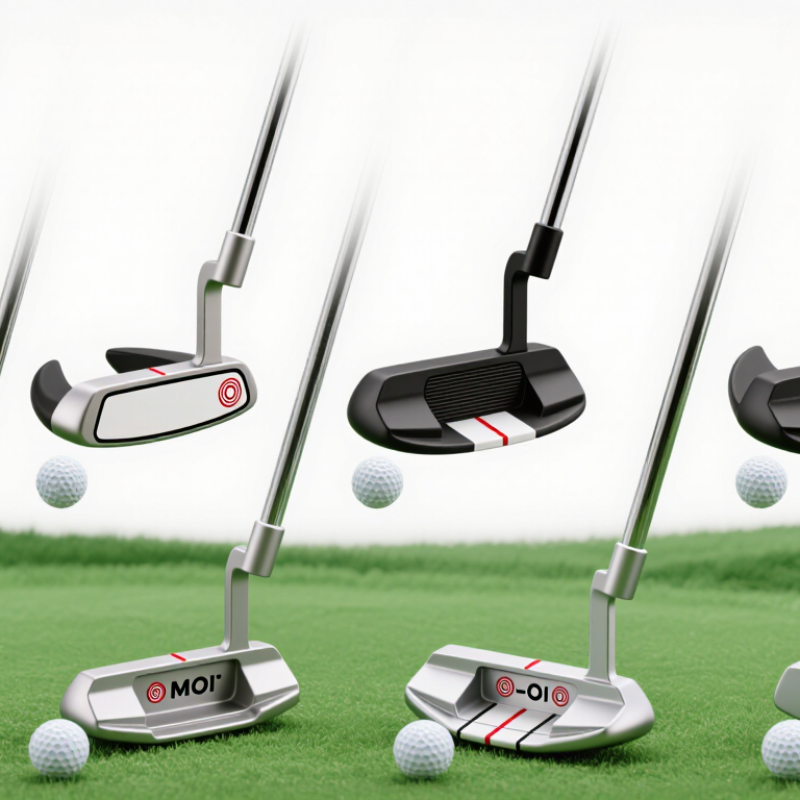
High-MOI Mallet |
Large, deep body with mass distributed around the perimeter |
Usually center or near the heel |
Commonly face-balanced, but toe-hang versions exist |
Straight-back-and-through to slight arc |
High moment of inertia helps reduce twisting when impact is away from the center |
Strong stability, large alignment areas, and generally high forgiveness |
The larger footprint can obscure the ball or feel less natural to golfers who prefer compact heads |
| 6 |
Face-Balanced Putter |
Blade, mid-mallet, or mallet head designed so the face points upward when balanced |
Often center-shafted or positioned close to the head center |
Face-balanced |
Minimal-arc or straight-back-and-through stroke |
Designed to resist the face opening and closing during the stroke |
Can make it easier to return the face square for golfers with limited rotation |
May feel restrictive or less natural for golfers with a pronounced arcing stroke |
| 7 |
Toe-Hang Putter |
Most often a blade or compact mid-mallet |
Heel-shafted or placed toward the heel |
Toe points downward when the shaft is balanced horizontally |
Slight arc to pronounced arc |
The balance allows more natural face rotation through impact |
Often matches golfers who release the putter with a visible arc |
Too much toe hang can make face control difficult for a very straight stroke |
| 8 |
Face-Forward Putter |
Extended or offset head with the shaft axis positioned farther forward |
Forward of the face or connected through a forward hosel |
Varies; many designs are strongly face-balanced or low in toe hang |
Usually straight to slight arc |
The forward shaft position can reduce excessive forward press and alter the visual setup |
May help golfers who struggle with consistent face presentation or excessive hand action |
Requires careful testing because the offset and unusual geometry can change aim perception |
| 9 |
Counterbalanced Putter |
Blade, mid-mallet, or mallet with extra weight in the grip or upper shaft |
Usually conventional, but the grip and shaft area are heavier than standard |
Head balance varies; overall club balance shifts closer to the hands |
Straight or arcing, depending on the head design |
Additional upper-club mass can make the stroke feel more stable and controlled |
May reduce unwanted wrist movement and improve tempo for some golfers |
Heavier overall feel can reduce touch on fast greens or require a longer adjustment period |
| 10 |
Long or Belly-Style Putter |
Extended-length putter with a larger grip-to-head distance; belly versions may rest lightly against the body but are not anchored under current rules |
Longer shaft, commonly center or near the heel |
Varies from face-balanced to toe hang |
Stroke depends on the head balance and the golfer’s setup |
The longer design changes posture, hand position, and the club’s swing feel |
Can provide a more upright setup and may help golfers seeking additional stability |
Anchoring the club against the body during the stroke is prohibited; length and setup must comply with the Rules of Golf |