

What Is a Golf Stand Bag and Why Do Buyers Choose It?
A golf stand bag is a lightweight golf bag designed for players who carry their clubs. It uses built-in legs to stand upright beside the tee box, fairway, or practice green. Most models include several pockets for balls, gloves, valuables, clothing, and water. Some also provide insulated compartments for drinks.
Rick Reimers, founder of Sun Mountain, has described the design philosophy simply: “A stand bag should make walking feel natural, not turn golf into a weightlifting exercise.” That idea explains its popularity. Buyers often want easier movement without sacrificing practical storage. A stable stand, comfortable dual straps, and balanced club dividers can make an eighteen-hole round feel less tiring. Small details matter. A waterproof pocket protects a phone during sudden rain. A wide base prevents the bag from tipping on uneven grass.
Still, a golf stand bag is not perfect for every golfer. Its lighter construction may offer less club protection than a large cart bag. The legs can also become awkward when the bag is strapped tightly to a riding cart. Some players carry too much equipment and then blame the bag for discomfort. That criticism deserves attention.
Choosing well requires honest self-assessment. Do you usually walk, ride, or alternate? How many clubs and accessories do you carry? The best golf stand bag is not always the lightest model. It is the one that remains comfortable, stable, and useful throughout a real round. Expect compromises. That is part of the decision.
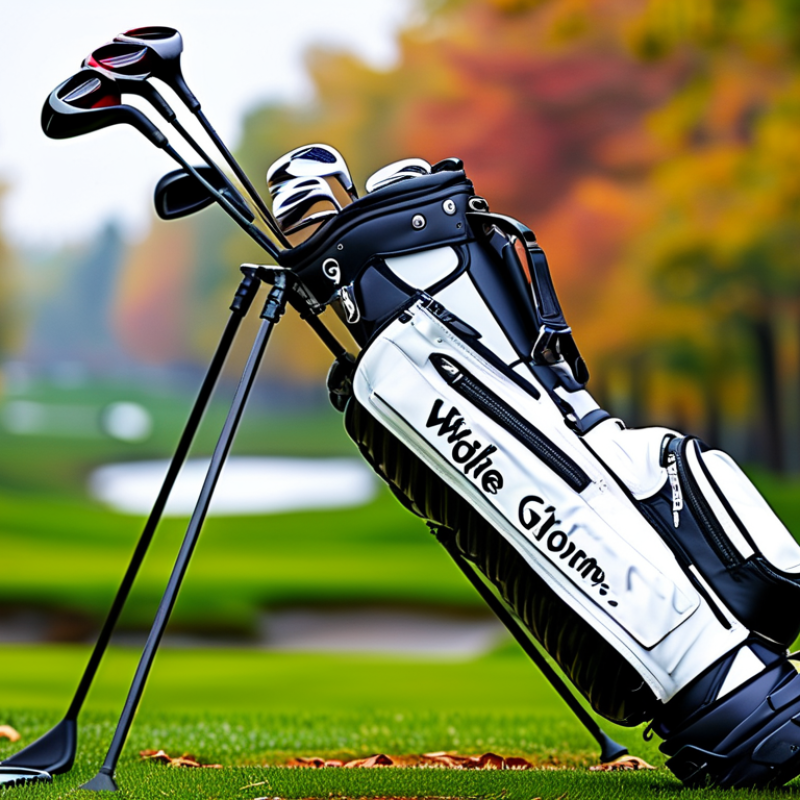
Definition and Core Purpose of a Golf Stand Bag
A golf stand bag is a portable golf bag with built-in, folding legs. Its core purpose is simple: keep clubs accessible while a player walks, practices, or waits between shots. When the base rests on uneven grass, the legs open and hold the bag at a convenient angle. This prevents clubs from lying in wet turf or leaning against a tree. Most models include a padded shoulder strap, a stable base, and several compartments for clubs, balls, gloves, and personal items. The exact layout varies, so “stand bag” describes a function, not one fixed design.
From practical use, the main benefit is mobility. A golfer can carry the bag across a practice area, set it down near the next shot, and reach for a club without bending repeatedly. A lighter build can reduce shoulder fatigue during an 18-hole round. However, lighter does not always mean better. Very small pockets may force rain gear or valuables into cramped spaces. I have also found that a narrow base can feel less secure on sloped ground.
A stand bag is best understood as a walking-focused storage system, not merely a smaller cart bag. Its structure balances carrying comfort, club protection, and quick access. Buyers should consider strap adjustment, leg stability, pocket capacity, and weather protection for local conditions. No design solves every need. A player carrying extra equipment may prefer more room, even with added weight.
What Is a Golf Stand Bag and Why Do Buyers Choose It? - Definition and Core Purpose of a Golf Stand Bag
| Data Dimension | Typical Specification or Description | Why It Matters to Buyers |
|---|---|---|
| Basic Definition | A lightweight golf bag with built-in retractable legs that support the bag in an upright position. | The integrated stand makes clubs easier to access without placing the bag directly on wet or uneven ground. |
| Primary Purpose | To carry golf clubs and essential accessories comfortably while allowing quick access during a round. | It combines portability, organization, and on-course convenience in one piece of equipment. |
| Typical Empty Weight | Approximately 1.8–3.2 kg (4–7 lb), depending on materials, storage, and stand construction. | A lower empty weight can reduce fatigue for golfers who walk frequently. |
| Club Capacity | Usually designed to hold a complete set of up to 14 clubs, although usable capacity varies by divider layout. | Golfers can carry a full set while choosing a lighter and more compact alternative to a cart-oriented bag. |
| Divider Configuration | Common layouts include 4-way, 5-way, and 14-way club dividers. | More dividers can improve club separation, while fewer dividers may help keep the bag lighter and simpler. |
| Stand Mechanism | Two folding legs typically extend automatically when the bag is tilted forward and retract when it is lifted. | The mechanism allows the bag to stand securely between shots and helps keep the grips and club heads accessible. |
| Carrying System | Usually includes a dual-strap backpack-style system with adjustable padding. | Two shoulder straps help distribute weight more evenly than carrying a single-strap bag on one shoulder. |
| Storage Capacity | Often includes several pockets for balls, tees, gloves, valuables, clothing, and drinks. | Separate compartments make frequently used accessories easier to organize and retrieve. |
| Weather Protection | Many models use water-resistant fabric and may include a rain hood for the club openings. | Weather-resistant materials help protect equipment during light rain, though they do not make every bag fully waterproof. |
| Best-Suited Golfers | Walkers, casual players, beginners, junior golfers, and golfers who alternate between walking and riding. | Its flexible design supports active movement while remaining practical on a golf cart when properly secured. |
| Main Buyer Benefits | Light weight, hands-free carrying, fast club access, built-in support, and useful storage. | These features reduce carrying effort and improve convenience throughout a round. |
| Potential Limitations | Usually offers less storage and less structural bulk than a full-size cart bag; an overloaded bag may be less stable. | Buyers should balance club capacity, pocket space, weight, and carrying frequency before choosing a model. |
| Typical Use Environments | Walking rounds, practice facilities, compact courses, travel, and mixed walking-and-riding play. | The stand and backpack-style straps make the bag adaptable to different playing conditions. |
Related Posts
-
10 Essential Tips for Choosing the Perfect Golf Stand Bag
-

2026 How to Choose the Best Golf Stand Bag for Your Needs?
-

2026 How to Choose the Best Golf Set for Your Game?
-

Top 10 Golf Shop Essentials for Every Golfer's Game?
-

Top 10 Benefits of Choosing Used Golf Clubs Over New Ones for Every Golfer
-
Why Choose the Best Golf Bags for Men for Your Game?