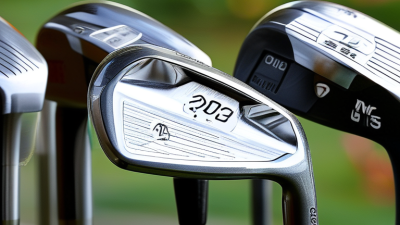

China has become an important sourcing destination for ladies golf clubs, serving brands, distributors, and golf retailers worldwide. Its manufacturing base includes experienced factories, engineering teams, and specialized component suppliers. These manufacturers can produce complete club sets, drivers, irons, wedges, hybrids, and putters for different skill levels. Many also support OEM and private-label programs.
Choosing a reliable manufacturer requires more than comparing prices. Buyers should examine shaft flexibility, clubhead materials, loft consistency, grip comfort, and overall swing weight. A well-designed ladies golf clubs collection should feel balanced, not merely look attractive. Factory experience matters. So does quality control.
Ask for product samples.
Review technical specifications carefully. A dependable supplier can explain testing procedures, production capacity, packaging standards, and export experience. Clear communication is equally important when adjusting colors, logos, shaft lengths, or set combinations. Independent inspections and written agreements can reduce avoidable sourcing risks.
No manufacturer is perfect. Small inconsistencies may still appear between samples and mass production. That point deserves honest attention. Buyers should verify tolerances, inspection records, certifications, and after-sales support before placing large orders. Supplier websites can help, but direct factory communication often reveals more practical details.
This guide introduces leading China ladies golf clubs manufacturers for global buyers. It focuses on production capability, customization options, quality management, and commercial reliability. With careful comparison, buyers can build partnerships that support consistent performance and long-term market trust.
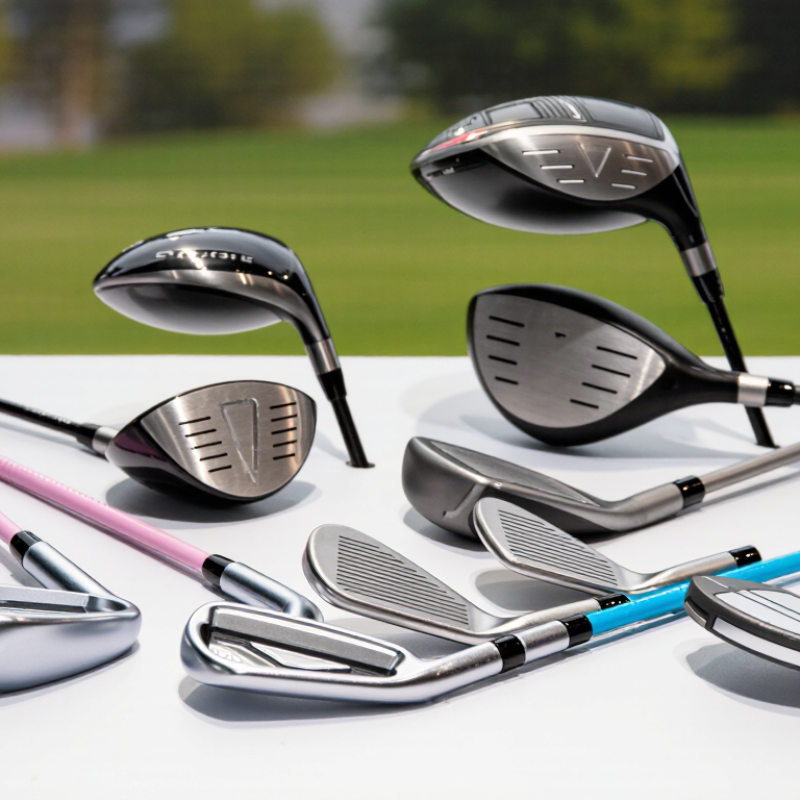
A leading ladies’ golf club manufacturer in China begins with evidence, not attractive packaging.
The R&A’s Golf Around the World 2023 report recorded 66.6 million golfers across 206 countries. This expanding market demands consistent performance for different swing speeds, heights, and playing conditions. Manufacturers should offer measured shaft flex, suitable grip sizes, and adjustable weighting. A women’s label alone is not enough.
Manufacturing Depth
Manufacturing depth matters. Buyers should inspect computer-aided prototypes, face-thickness controls, loft and lie testing, and batch-level material records. ISO 9001-based quality systems can support repeatability, but certification does not replace independent testing. The U.S. National Golf Foundation reported that women made up roughly 29% of on-course golfers in 2023. That figure shows meaningful demand, yet it does not justify copying men’s designs in lighter colors.
Reliable factories also communicate clearly about tolerances, sampling, packaging, and corrective actions. A production sample should survive repeated impact tests before large-scale shipment. Small details matter. A loose ferrule can damage buyer confidence quickly. Environmental reporting is increasingly relevant, especially for coatings, recycled metals, and factory energy use. Still, many suppliers publish incomplete environmental data. That weakness deserves scrutiny. Global buyers should compare test records, audit findings, and after-sales response rather than relying on catalog claims. The strongest manufacturer combines engineering experience, transparent documentation, and practical feedback from female players.
China’s golf club manufacturing strength is concentrated in several industrial regions. The Pearl River Delta, especially Guangdong, supports large-scale OEM production, CNC machining, polishing, painting, and final assembly. Factories there often manage complete club programs under one roof. This can shorten sampling time. It may also simplify quality control.
The Yangtze River Delta, including Jiangsu and Zhejiang, is known for precision metalworking and component production. Manufacturers in these areas commonly supply club heads, hosels, shafts, grips, and small accessories. Fujian also has strong sporting-goods capabilities, including molding, stitching, and packaging. Regional specialization can improve efficiency, but it may require coordination between several suppliers. That adds risk.
Tips: Ask for material certificates, dimensional reports, and swing-weight records. Inspect samples under consistent lighting. A club may look excellent but feel unbalanced. Confirm tolerances before mass production. Factory photos are not enough. Third-party inspections can provide more reliable evidence.
Experienced buyers should compare regions by capability, not only by quotation. Review equipment lists, testing procedures, worker training, and export experience. Ask how rejected heads are handled. Ask whether shaft alignment is checked manually or mechanically. No region is perfect. Even a well-equipped factory may miss a small cosmetic defect. Clear specifications, pilot orders, and documented inspections create stronger purchasing decisions for global buyers.
Guangdong is widely associated with the broadest golf-club supply chain, including precision machining, casting, forging, finishing, assembly, and export logistics. Jiangsu and Zhejiang are strong in metal processing, tooling, and OEM production, while Fujian is notable for sporting-goods manufacturing and assembly. The chart shows the number of established capability categories present in each region, not company counts or market share.
Capability categories: precision machining, casting, forging, surface finishing, club assembly, and export-oriented supply-chain services. Regional capability mapping is synthesized from publicly documented Chinese manufacturing and sporting-goods industry patterns.
Chinese golf club manufacturers usually begin with player research, not decoration. They study swing speed, grip comfort, shaft length, and common fitting needs. Ladies’ clubs often use lighter shafts and balanced heads, but these choices require careful testing. A lightweight design can improve control. It can also feel unstable for stronger players.
Engineers create digital models before producing trial heads. They adjust loft, lie angle, face thickness, and center of gravity. Computer simulations help predict launch conditions and energy transfer. Skilled technicians then build physical prototypes for hitting tests. They check sound, vibration, paint adhesion, and head consistency. Small details matter. A few grams can change the club’s feel.
Production normally includes precision casting or forging, CNC finishing, shaft installation, and multiple inspections. Workers measure head weight and loft with calibrated equipment. They also inspect welds, grooves, ferrules, and surface coating under controlled lighting. Independent testing can confirm durability and performance claims. However, no design is perfect on paper. Early prototypes may launch too high or feel too soft. Reliable manufacturers revise tooling after real-player feedback. They should also explain material choices, testing methods, tolerances, and quality records clearly to global buyers. This transparency helps buyers compare suppliers and avoid decisions based only on appearance.
China’s ladies’ golf club manufacturers are serving a broader, more demanding market. The R&A’s Golf Around the World 2023 report recorded 66.6 million golfers globally, creating space for equipment designed around different swing speeds, heights, and playing conditions. Quality control must begin with incoming materials, not the final inspection. Factories should verify shaft torque, clubhead weight, loft, lie angle, and grip dimensions through documented sampling plans.
Practical testing matters. A reliable production line uses calibrated loft-and-lie machines, swing-weight scales, impact checks, and visual inspections under consistent lighting. The National Golf Foundation reported 28.1 million on-course golfers in the United States during 2023, showing why export buyers need repeatable specifications across large orders. Small deviations can change launch height or directional control. That is easy to underestimate.
Customization is more useful when based on fitting data. Buyers can request lighter heads, softer shafts, shorter lengths, wider grips, or color options for specific markets. OEM and ODM teams should provide drawings, prototypes, pilot batches, and pre-shipment reports before mass production. Good documentation builds trust. Still, no factory is flawless. Samples may perform differently from full production if process controls are weak. Buyers should review corrective-action records, material certificates, and independent test results, rather than trusting attractive samples alone. Her swing is not a marketing stereotype; it is a measurable fitting profile.
Global buyers rarely choose a golf club supplier from catalog photos alone. They inspect manufacturing experience, engineering depth, and communication discipline. A credible Chinese factory should explain its forging, casting, grinding, and finishing processes clearly. Ask for production records, material specifications, and recent sample details. Look closely at shaft alignment, grip installation, loft, lie, and swing weight. Small inconsistencies often reveal larger process weaknesses. Numbers matter.
Experienced buyers request samples built from the intended specification, not a showroom model. They compare several clubs using launch data and physical measurements. Check face thickness, groove consistency, ferrule fit, and paint durability. A professional supplier should provide inspection checkpoints before mass production. It should also explain tolerance ranges in writing. Yet buyers should not trust every document immediately. Verify claims through factory video calls, third-party inspections, or a controlled trial order.
Reliable cooperation depends on more than a competitive quotation. Evaluate response time, revision accuracy, packaging protection, and after-sales handling. Ask who owns the tooling, how rejected pieces are recorded, and how changes receive approval. A factory may offer impressive capacity but struggle with small batches or seasonal pressure. That matters. I have seen attractive prototypes fail because production details were never frozen. Clear drawings, signed samples, and staged payments reduce avoidable disputes.