

10 Best Tactical Apparel Manufacturers for Global Buyers

Tactical Apparel has moved beyond uniform supply. Buyers now expect durability, comfort, responsible sourcing, and consistent delivery. A jacket may face rain, abrasion, repeated washing, and long hours of movement. Small design choices matter. Pocket placement matters. Seam strength matters.

Industry data confirms a growing and complex market. Allied Market Research valued the global military apparel market at approximately USD 1.6 billion in 2021. Its forecast projects continued growth through 2031. MarketsandMarkets also identifies protective clothing as a major expanding segment, driven by workplace safety, advanced fabrics, and performance requirements. These reports use different definitions, so their figures should not be compared blindly. That limitation is important.

Greg Thompson, co-founder of Triple Aught Design, has described the design principle this way: “Good gear should support the mission, not distract from it.” His point remains practical for international buyers. Tactical Apparel must perform quietly, fit consistently, and withstand real use.

However, supplier selection is not only about fabric weight or product photographs. Buyers should examine test methods, factory capacity, traceability, quality records, and communication standards. Certifications help, but they do not replace factory verification. A polished catalog can hide uneven stitching.

The following list reviews ten Tactical Apparel manufacturers for global buyers. It considers product specialization, material capability, customization, compliance awareness, lead times, and export readiness. No supplier is perfect. Requirements differ by climate, workforce, budget, and use case. That uncertainty deserves honest evaluation.
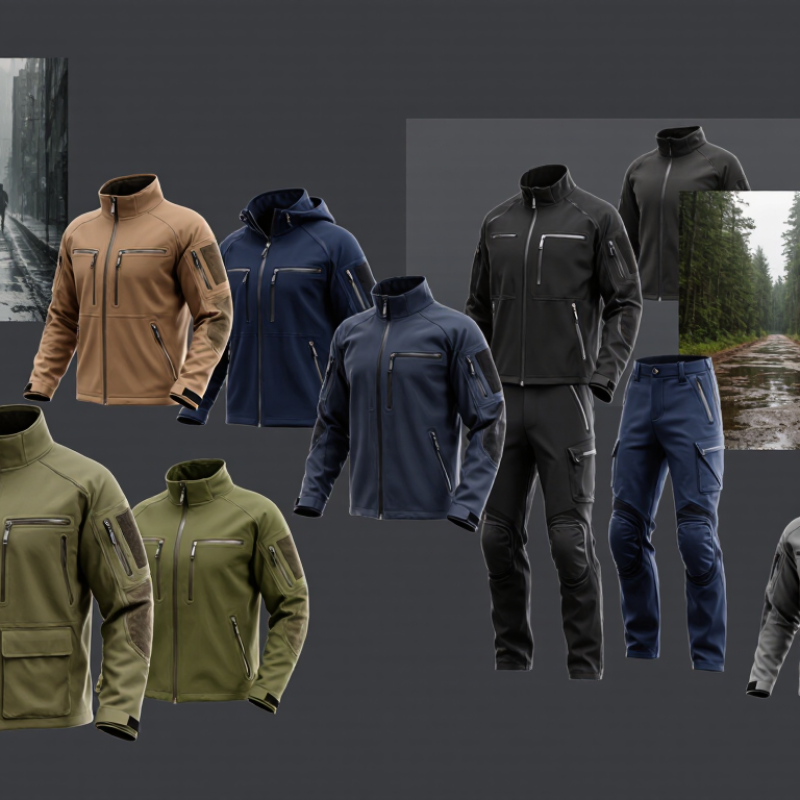
10 Best Tactical Apparel Manufacturers for Global Buyers

Defining Tactical Apparel Through ISO 13688 and EN ISO 20471 Standards

For global buyers, tactical apparel begins with disciplined standards, not visual styling. ISO 13688 defines baseline requirements for protective clothing. It addresses ergonomic design, sizing, material safety, ageing, labeling, and user information. The garment should allow squatting, climbing, and repeated arm movement without restricting the wearer.

EN ISO 20471 focuses on high-visibility clothing. It specifies fluorescent background material and retroreflective components for daytime and low-light recognition. Garments are classified by visibility level, based on visible material areas and reflective performance. A higher class is not automatically better for every task. Buyers should match the class to traffic exposure, work conditions, and movement demands.

A label is not enough.

Reliable manufacturers should provide test reports, technical files, care instructions, and traceable fabric details. Check whether reflective tape remains effective after washing and abrasion. Inspect seams around pockets, closures, and shoulder areas. These small points often reveal production discipline. A practical sample review should include fit testing over base layers and movement testing with equipment. ISO 13688 and EN ISO 20471 support informed selection, but neither replaces a workplace risk assessment. Some purchasing teams still focus too heavily on appearance. That is a useful warning. Standard compliance can confirm defined performance, while comfort, durability, and honest documentation determine whether the apparel works in real conditions.

EN ISO 20471 classifies high-visibility garments by the minimum visible area of background fluorescent material, retroreflective material, and combined-performance material. ISO 13688 defines general protective-clothing requirements, such as ergonomics, sizing, innocuousness, marking, and user information, but does not assign visibility classes or minimum material areas.

Mapping 10 Leading Manufacturers by Product Range and Global Capacity

The global tactical apparel market includes ten distinct manufacturing profiles, each serving different buyer needs. One focuses on lightweight field shirts, while another specializes in reinforced trousers. Three factories provide layered systems, including base layers, insulation, and weather shells. Two concentrate on duty footwear and load-bearing accessories. The remaining three offer broad uniform programs with custom sizing, fabric selection, and packaging.

Capacity varies sharply. Smaller facilities may produce 5,000 units monthly, supporting flexible sampling and low-volume orders. Larger factories can exceed 100,000 units monthly across several production lines.

In buyer audits, I examine cutting accuracy, seam strength, fabric traceability, and final inspection records. A reliable manufacturer should also explain lead times clearly. Delays often begin with unapproved color changes or incomplete size specifications.

Product range alone does not prove global readiness. Buyers should request recent export references, laboratory test reports, social compliance records, and shipment performance data. Useful details include carton dimensions, labeling systems, spare-material policies, and communication coverage across time zones. Some manufacturers appear capable online but lack stable subcontractor control. That weakness matters. A factory may pass one inspection and struggle during peak season. I would compare sample results with bulk production, then review defects honestly instead of hiding them. Perfect consistency is promised too easily.

Benchmarking Durability with ISO 12947 Abrasion and AATCC 61 Wash Tests

When comparing the 10 best tactical apparel manufacturers, global buyers should examine test evidence, not appearance alone. Durable fabric must survive repeated rubbing, washing, and field movement. ISO 12947 abrasion testing measures surface wear under controlled pressure. The Martindale result can reveal weak elbows, seat panels, and pocket edges. A high cycle count helps, but it is not the whole story. Fabric weight, weave, seam construction, and finishing also affect service life.

AATCC 61 wash tests simulate accelerated laundering. They can expose shrinkage, color loss, coating damage, and seam distortion. Ask manufacturers for the exact test method, cycle setting, water temperature, detergent details, and laboratory date. “Passed” is too vague. Reliable suppliers should connect laboratory results with production-batch controls. They should also explain whether testing covered the finished garment or only the fabric. That difference matters.

Tips: Request samples from the intended production lot. Mark abrasion zones before testing. Compare measurements after five, ten, and fifteen washes. Inspect a pocket flap closely. Small failures become expensive returns. Field trials remain useful, even after laboratory approval. Laboratory conditions cannot fully reproduce dust, sweat, kneeling, or sharp equipment edges. I have seen strong fabric reports hide weak bartacks and uneven stitching. That is an uncomfortable reminder: a test report supports judgment, but never replaces it.

Verifying Protection Through NIJ 0101.06 and EN 388 Performance Classes

Global buyers comparing tactical apparel manufacturers should treat protection as measurable performance, not marketing language. NIJ 0101.06 covers ballistic body armor, not shirts, trousers, or ordinary fabric. Its technical data requires controlled ammunition, impact velocity, conditioning, and shot placement. The standard limits backface deformation to 44 mm for compliant armor. Request the exact model, threat level, laboratory report, production lot, and current compliance listing. “NIJ tested” alone is weak evidence. It may describe a prototype.

EN 388:2016+A1:2018 applies mainly to protective gloves against mechanical risks. Its performance classes measure abrasion, blade cut, tear, puncture, and optional impact resistance. Abrasion, tear, and puncture commonly use Levels 1–4. Cut resistance uses Levels 1–5 or newer A–F results, while impact protection is marked P when passed. Ask suppliers for the complete rating sequence, test date, sample size, and conditioning details. A single “EN 388 certified” phrase hides important differences.

In practical procurement, compare fabric weight, seam construction, closure strength, and test conditions together. A glove rated highly for cutting may still tear at a seam. That matters. Standards improve decisions, but they do not replace field evaluation. Industry safety reports repeatedly show that certification claims require traceable documentation, not attractive specification sheets. I would also verify whether the tested product matches the delivered production version. Small revisions can change protection.

10 Best Tactical Apparel Manufacturers for Global Buyers — Verifying Protection Through NIJ 0101.06 and EN 388 Performance Classes

Rank Anonymous Manufacturer Profile Core Manufacturing Capability NIJ 0101.06 Verification Target EN 388 Performance Target Required Test Evidence Recommended Buyer Inspection Points
1 Profile 01 — Ballistic Carrier Specialist Modular plate carriers and soft-armor carrier systems for professional users. Level IIIA
For compatible soft armor tested against specified handgun threats.
Not directly applicable
EN 388 is primarily a glove-performance standard.
NIJ laboratory test report, armor model identification, lot traceability, and product label verification. Confirm panel dimensions, carrier compatibility, seam reinforcement, closure strength, and replacement-panel controls.
2 Profile 02 — Hard-Armor Integration Specialist Plate-compatible tactical vests and load-bearing systems designed around rigid armor inserts. Level III
For armor tested against the NIJ 0101.06 Level III rifle-threat requirement.
Not directly applicable
Use EN 388 only for separately supplied protective gloves.
NIJ-compliant test documentation for the exact plate model, dimensions, curvature, and configuration. Check plate-pocket tolerances, retention systems, edge protection, shoulder adjustment, and load distribution.
3 Profile 03 — Maximum-Rating Armor Platform Heavy-duty carriers and protective platforms intended for high-threat hard-armor configurations. Level IV
For armor tested against the NIJ 0101.06 Level IV armor-piercing rifle-threat requirement.
Not directly applicable
Apparel construction should not be represented as EN 388 armor performance.
Independent ballistic test report, exact armor designation, conditioning record, and production inspection plan. Verify plate retention, carrier sizing, mobility limits, abrasion zones, and compatibility with approved plates.
4 Profile 04 — Cut-Resistant Glove Manufacturer Tactical and duty gloves using aramid, high-performance polyethylene, or engineered composite yarns. Not applicable
Gloves are not certified as NIJ 0101.06 ballistic body armor unless separately designed and tested as armor.
Cut: A–FPuncture: 1–4
Use the complete EN 388 marking, not cut resistance alone.
EN 388:2016+A1:2018 test report, material composition, size range, and production batch records. Check palm and finger coverage, dexterity, seam durability, touchscreen performance, and test-method designation.
5 Profile 05 — High-Abrasion Duty Apparel Specialist Combat shirts, field trousers, reinforced uniforms, and load-bearing apparel for extended field use. Not applicable
Textile apparel does not receive a NIJ ballistic level unless it incorporates separately tested armor components.
Component-based only
EN 388 results may support glove specifications, not general garment claims.
Fabric abrasion data under the applicable textile method, seam-strength results, colorfastness data, and wash testing. Inspect reinforcement placement, bartacks, zipper quality, pocket loading, shrinkage, and color consistency.
6 Profile 06 — Flame-Resistant Tactical Clothing Specialist Flame-resistant shirts, trousers, coveralls, and layering systems for thermal-risk environments. Not applicable
Flame resistance and ballistic resistance are separate protection claims requiring separate standards.
Not directly applicable
EN 388 does not establish flame-resistant apparel performance.
Flammability or thermal-protection test reports matching the exact fabric composition and garment design. Verify fiber content, after-wash performance, labeling, seam construction, closure materials, and care instructions.
7 Profile 07 — Water-Resistant Field Gear Manufacturer Weatherproof shells, soft-shell jackets, rainwear, and tactical outer layers. Not applicable
Water resistance must not be presented as NIJ ballistic protection.
Not directly applicable
EN 388 applies to protective gloves rather than rainwear performance.
Hydrostatic-pressure or water-penetration results, seam-sealing records, fabric specifications, and wash-cycle data. Evaluate hood adjustment, storm flaps, waterproof zippers, seam tape, breathability, and field-repair provisions.
8 Profile 08 — Integrated Glove-and-Uniform Supplier Coordinated tactical clothing programs with matching protective gloves and accessories. Separate verification required
Only armor components tested under NIJ 0101.06 may carry a corresponding ballistic claim.
Abrasion: 1–4Tear: 1–4Puncture: 1–4
Additional cut and impact codes may apply.
Separate product-level reports for gloves, armor, textiles, and accessories; avoid one report covering unrelated products. Check SKU-level traceability, consistent sizing, color matching, replacement availability, and packaging labels.
9 Profile 09 — OEM/ODM Tactical Program Manufacturer Private-label development, pattern engineering, sampling, grading, and contract production. Model-specific
NIJ documentation must identify the exact armor model and configuration supplied to the buyer.
Report-specific
EN 388 results must correspond to the exact glove design, materials, and construction.
Technical file, approved sample, bill of materials, change-control procedure, inspection plan, and independent reports. Control unauthorized material substitutions, pattern changes, factory transfers, labeling changes, and re-testing triggers.
10 Profile 10 — Government and Institutional Supply Specialist Large-scale production, documented quality systems, export packaging, and contract fulfillment. Procurement-specific
Use current tender requirements and verify whether NIJ 0101.06 or a newer edition is requested.
Procurement-specific
Specify the complete EN 388 performance code for gloves rather than using a general “cut-proof” claim.
Factory quality records, pre-shipment inspection reports, conformity documents, test reports, and batch certificates. Assess production capacity, lead times, corrective-action history, export documentation, warranty terms, and spare-part support.
Standards note: NIJ 0101.06 is a ballistic body-armor performance standard, while EN 388:2016+A1:2018 specifies mechanical-risk performance for protective gloves. Their ratings should not be substituted for one another. NIJ protection levels and EN 388 performance classes must always be verified against the exact product model, configuration, materials, and independent test documentation.

Ranking Suppliers by MOQ, Lead Time, REACH Compliance, and Total Cost

10 Best Tactical Apparel Manufacturers for Global Buyers

Ranking Suppliers by MOQ, Lead Time, REACH Compliance, and Total Cost

A useful supplier ranking begins with measurable sourcing evidence. MOQ matters when buyers test a new design or serve a smaller market. Lower MOQs reduce inventory risk, but they may increase unit prices and sampling fees. Manufacturers offering 300 to 800 pieces often suit pilot orders better than factories requiring several thousand units.

Lead time

Lead time should include fabric booking, sample approval, production, and final inspection. A quoted 30-day production window can become 50 days after revisions.

REACH compliance

REACH compliance requires more than a general declaration. Buyers should request recent test reports for dyes, coatings, trims, and printed labels. A reliable manufacturer can identify material sources and explain corrective actions.

In practical audits, missing documents often reveal weak process control. That detail deserves a lower ranking. Still, paperwork alone cannot prove consistent production quality.

Total cost

Total cost provides the fairest comparison. Add unit pricing, tooling, packaging, freight, duties, inspection charges, and possible defect losses. A supplier with a higher quote may become cheaper after fewer alterations and faster delivery.

Ask for a landed-cost worksheet. It exposes hidden expenses.

My own ranking would reward transparent quotations, stable lead times, and traceable compliance records.

However, supplier performance can change after peak season, staff turnover, or material shortages. Recheck the evidence before placing every substantial order.