7 Best Track Slide Roller Suppliers for Global Buyers
Choosing the right Track Slide Roller supplier can influence equipment movement, maintenance costs, and production reliability. Global buyers often compare suppliers by price first. That approach can create expensive problems later. A roller may look suitable in a catalog, yet fail under uneven loads or dusty workshop conditions.
This guide examines seven Track Slide Roller suppliers serving international buyers. It considers material quality, dimensional accuracy, load ratings, surface finish, and customization support. It also reviews export experience, packaging practices, certifications, and technical communication. Small details matter. For example, sealed bearings can reduce contamination, while a hardened track may improve service life in repetitive applications. Clear drawings and inspection reports are equally important.
Real purchasing decisions require more than attractive product pages. Buyers should confirm roller diameter, track width, mounting holes, operating temperature, and expected travel frequency. They should also request samples when tolerances are critical. A supplier with a low unit price may offer higher total costs through delays, replacements, or limited after-sales support. Shipping terms deserve attention too.
No supplier is perfect.
Published specifications do not always reflect field performance. Testing methods may differ, and application conditions can change results. Therefore, this overview should support careful comparison rather than replace engineering judgment. Reliable suppliers explain limitations, answer technical questions clearly, and provide consistent documentation. The strongest candidates combine practical manufacturing experience with stable quality control and responsive service. That balance helps global buyers select a Track Slide Roller partner with greater confidence and fewer avoidable surprises.
Track Slide Roller Basics and Key Applications
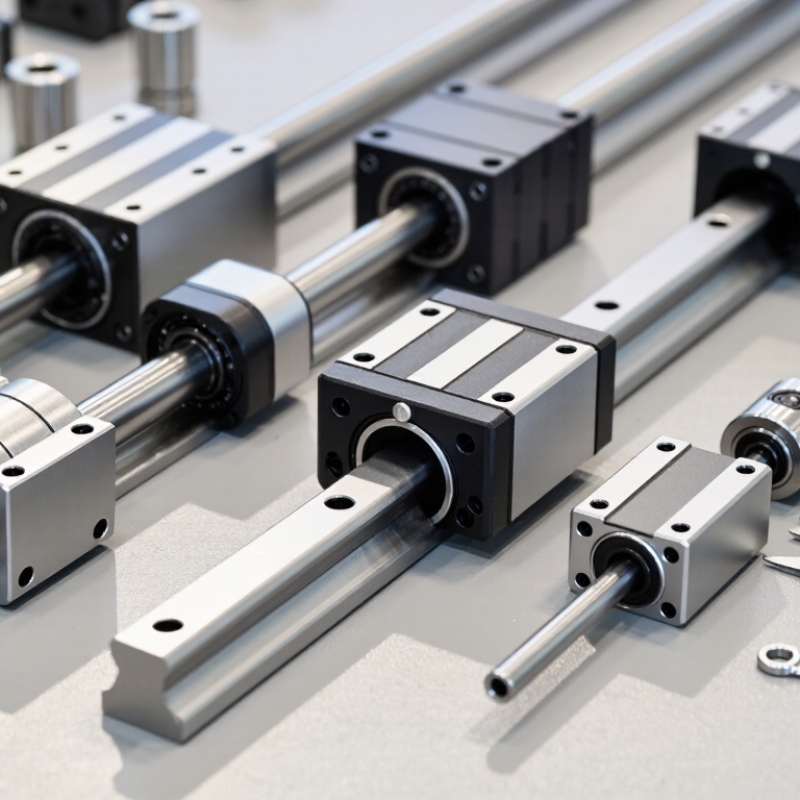
Track slide rollers guide moving parts along a fixed rail, reducing friction and controlling lateral motion. They usually combine a hardened track surface, rolling elements, seals, and a mounting stud. Load capacity depends on radial force, shock, speed, alignment, and lubrication. A larger roller is not automatically safer. Misalignment can damage the track quickly.
Their applications include conveyor systems, warehouse equipment, packaging machines, sliding doors, agricultural machinery, and automated production lines. The International Federation of Robotics reported more than 500,000 industrial robots installed globally in 2023. This growth increases demand for reliable linear movement components. Grand View Research also identifies industrial automation as a major growth market, supported by smart factories and machine modernization. These figures do not prove every roller market forecast. Definitions vary between reports, so buyers should check the original methodology.
Tips: Match the roller to real operating conditions, not only catalog ratings. Measure load direction, travel frequency, temperature, contamination, and rail hardness. Ask suppliers for fatigue-life calculations, material certificates, and inspection records. In field maintenance, worn tracks often receive new rollers first. That can be the wrong repair. A damaged rail may recreate noise, vibration, and uneven loading. Allowing slight design tolerance is wise, but excessive clearance causes impact and unstable movement. Samples and endurance testing remain useful, especially for high-cycle equipment.
How to Evaluate Track Slide Roller Suppliers
When comparing the seven best track slide roller suppliers, start with evidence, not polished catalogs. MarketsandMarkets estimates that the global linear motion market will grow strongly through 2028, increasing pressure on suppliers to prove performance. Ask for load ratings, fatigue data, running-life tests, and dimensional tolerances. Numbers matter. A roller rated for 2,000 newtons may fail early under shock loads or poor alignment.
Inspect manufacturing quality closely. Request material certificates, bearing specifications, seal details, and surface-hardness results. ISO 9001 certification supports process control, but it does not guarantee a suitable roller. Confirm whether each batch receives inspection records and traceable lot numbers. Small details matter. A 0.05-millimeter dimensional difference can create noise, vibration, or uneven travel in a sliding track.
Evaluate practical service as carefully as engineering data. Suppliers should provide CAD files, installation guidance, replacement schedules, and clear responses within a defined time. Compare minimum order quantities, sample availability, packaging, export documentation, and realistic lead times. The World Bank’s Logistics Performance Index shows that international delivery reliability varies considerably between markets, so promises need verification. Ask for references from applications with similar loads, speeds, contamination, and duty cycles. My own caution is simple: a low purchase price can hide frequent replacement costs. Some evaluations also overlook corrosion testing, which may matter more than a small unit-price difference.
How to Evaluate Track Slide Roller Suppliers
Suggested screening priorities for global buyers, rated from 1 to 5 based on common industrial sourcing requirements.
Product consistency, load performance, dimensional accuracy, and corrosion resistance should receive the greatest attention because they directly affect service life and operating safety. Buyers should also verify documentation, production capacity, delivery reliability, customization capability, and after-sales support before approving a supplier.
Seven Leading Track Slide Roller Suppliers for Global Buyers
7 Best Track Slide Roller Suppliers for Global Buyers
Seven Leading Track Slide Roller Suppliers for Global Buyers should offer more than competitive pricing. Reliable suppliers provide rollers for sliding doors, industrial guides, equipment frames, and automated systems. Their products should match load requirements, rail dimensions, travel speed, and operating conditions.
Experienced buyers inspect bearing quality, wheel hardness, surface finish, and corrosion resistance. They also request dimensional drawings, material certificates, test records, and sample units. A dependable supplier communicates clearly about tolerances, packaging, lead times, and replacement parts. Small details matter. One inaccurate measurement can cause noise, uneven movement, or premature wear. I have seen projects delayed because a supplier confirmed compatibility without checking the complete rail assembly.
Tips: Compare at least three suppliers. Test samples under real loads. Ask about quality inspection steps. Confirm export packaging and documentation before ordering. Do not choose by price alone.
Global buyers should also review production capacity and after-sales support. A supplier may produce excellent rollers but struggle with urgent replenishment. Another may respond quickly but lack stable quality control. This comparison requires patience. Some technical claims deserve verification, especially when the application involves outdoor moisture, dust, vibration, or frequent cycling. A practical supplier should welcome engineering questions and explain limitations honestly. Perfection is unlikely, so transparent communication may be the more valuable advantage.
Steps for Selecting and Sourcing the Right Supplier
Selecting the right track slide roller supplier starts with the working conditions, not the catalog. Define load capacity, rail width, wheel diameter, travel speed, and daily operating hours. Measure the installation space carefully. A few millimeters can affect alignment and smooth movement.
Ask each shortlisted supplier for drawings, material details, surface treatment, and test data. For outdoor equipment, check corrosion resistance and sealing performance. Request a sample before placing a large order. Test it under realistic weight and repeated movement. Keep the list practical. Seven suppliers are enough for a serious comparison.
Sourcing also requires checking production reliability. Review factory experience, quality-control records, communication speed, minimum order quantities, packaging, and lead times. Request recent inspection photos or a live production video. Confirm spare-part availability and written warranty terms. Compare the full landed cost, including transport and customs charges. A low unit price may hide weak packaging or inconsistent machining. Small trial orders help.
I once underestimated the effect of rail misalignment during supplier evaluation. The rollers looked precise, but installation became difficult. That experience changed my process. I now ask suppliers how they handle tolerance problems and replacement claims. Their response often reveals more than a polished brochure. Keep all specifications in one document, approve a pre-shipment inspection, and record every agreed measurement before payment.
7 Best Track Slide Roller Suppliers for Global Buyers - Steps for Selecting and Sourcing the Right Supplier
Anonymous supplier comparison based on commonly published track roller specifications, international sourcing practices, and buyer verification criteria
| Rank | Anonymous Supplier Profile | Typical Product Scope | Common Bore / Stud Range | Typical Static Load Range | Operating Temperature | Relevant Standards or Documents | Indicative MOQ | Typical Lead Time | Best Buyer Fit |
| 1 | High-volume precision manufacturer | Track rollers, cam followers, yoke rollers, sealed guide rollers | 6–30 mm | 1.5–35 kN | −20°C to +120°C | ISO 9001 certificate, material certificate, dimensional inspection report, load test data | 100–500 pcs | 25–45 days | OEM programs requiring stable dimensions and repeat orders |
| 2 | Custom-engineering specialist | Non-standard track rollers, eccentric studs, special seals and coatings | 8–40 mm | 2–60 kN | −40°C to +180°C | Engineering drawing approval, hardness report, coating specification, first-article inspection | 20–100 pcs | 35–60 days | Automation, packaging equipment, and machinery with application-specific requirements |
| 3 | Standard catalog supplier | Standard yoke-type rollers, stud-type rollers, guide wheels | 5–25 mm | 0.8–20 kN | −20°C to +100°C | Product datasheet, dimensional drawing, basic material declaration, batch traceability | 10–100 pcs | 7–25 days | Maintenance buyers and distributors needing frequently used sizes |
| 4 | Corrosion-resistant application supplier | Stainless-steel rollers, sealed rollers, washdown-compatible assemblies | 6–25 mm | 0.5–15 kN | −30°C to +120°C | Steel grade declaration, corrosion-test method, seal material data, surface-finish report | 50–300 pcs | 30–55 days | Food-processing, chemical, outdoor, and humid-environment equipment |
| 5 | Heavy-load industrial supplier | Large track rollers, crowned rollers, reinforced stud rollers | 20–80 mm | 15–150 kN | −20°C to +150°C | Load-rating calculation, heat-treatment report, dimensional inspection, fatigue-test evidence | 10–50 pcs | 40–75 days | Material handling, construction machinery, industrial conveyors, and heavy automation |
| 6 | Rapid-delivery stockist | Ready-stock standard rollers, replacement assemblies, maintenance kits | 6–30 mm | 1–30 kN | −20°C to +100°C | Stock confirmation, product drawing, lot number, packing list, country-of-origin statement | 1–20 pcs | 1–10 working days | Emergency maintenance and low-volume replacement purchases |
| 7 | Cost-focused export supplier | Economical standard rollers, bulk orders, private-label compatible parts | 5–35 mm | 0.8–40 kN | −20°C to +120°C | Pre-shipment inspection, material declaration, sample approval, export packing specification | 300–1,000 pcs | 30–60 days | Distributors and buyers prioritizing unit cost for forecasted repeat volumes |
Supplier-selection checklist: Confirm roller diameter, stud or bore size, track profile, radial and axial loads, speed, lubrication, sealing, operating temperature, corrosion exposure, required tolerances, inspection documents, packaging, Incoterms, payment terms, sample approval, and production lead time before placing a purchase order.
Note: The ranges above are indicative industry benchmarks for commonly supplied track slide rollers and are not quotations or guaranteed specifications. Final load ratings, dimensions, materials, tolerances, delivery dates, and minimum order quantities must be verified against the selected supplier’s current technical documents and approved samples.